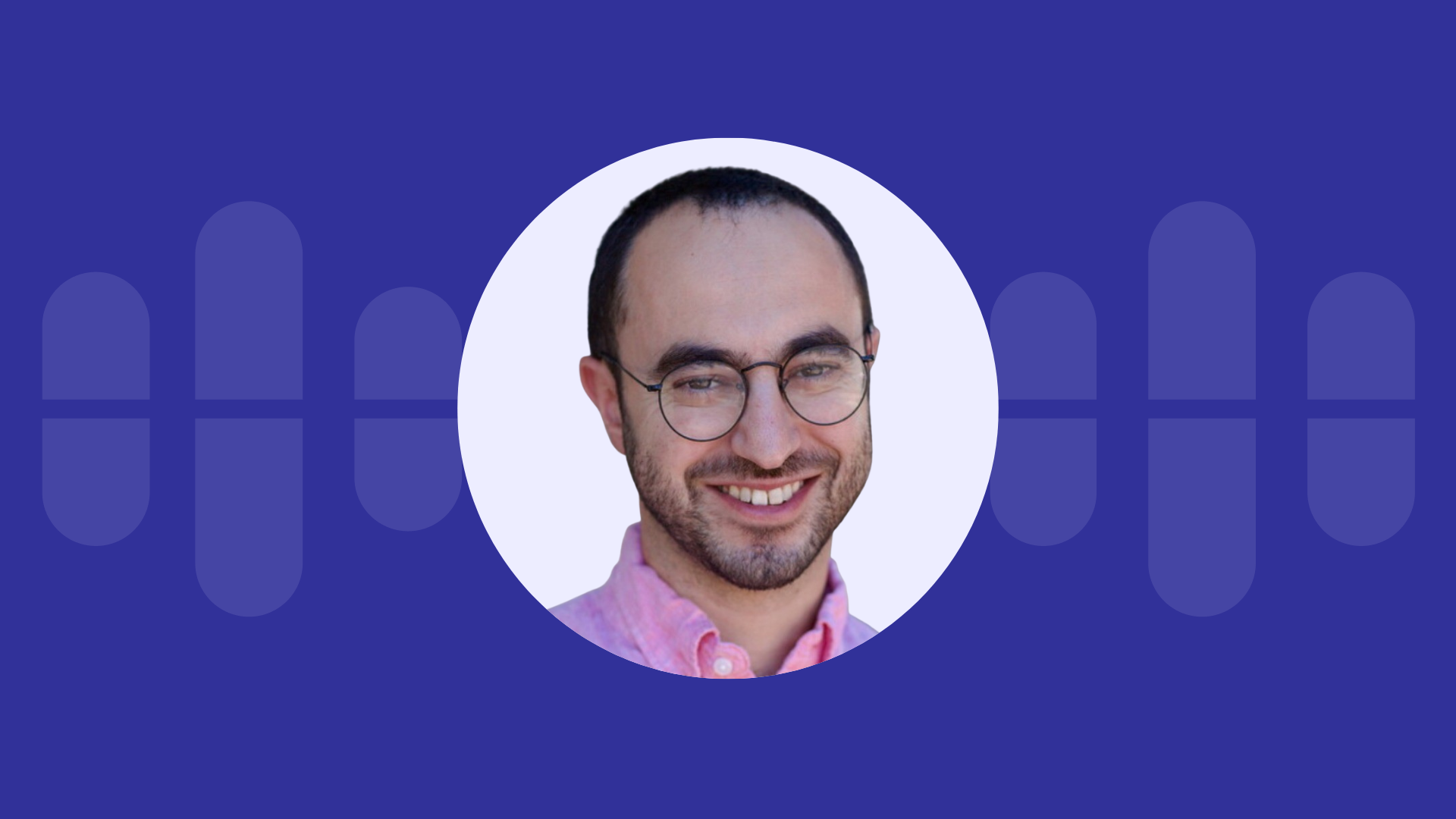
Adel Elsayed, MD, is a clinical psychiatrist and assistant professor at the University of South Florida and the author of Burnout: Where the Head Goes, the Body Follows. He joined the podcast to discuss why provider burnout persists and how healthcare leaders should rethink it. With training in both engineering and psychiatry, Dr. Elsayed brings a systems lens to one of healthcare’s most pressing workforce challenges.
In this episode, he explains why burnout is fundamentally a capacity problem, why many current interventions miss the root cause, and what healthcare leaders can assess and redesign to better protect their teams.
Burnout persists because we are often solving the wrong problem.
Capacity is finite, measurable, and shaped by more than workload alone.
Leaders must assess system strain and treat workforce sustainability as a strategic metric.
“It’s not about the drop. It’s about everything else in that bucket.”
– Dr. Adel Elsayed
Key takeaways
Dr. Elsayed reframed provider burnout as a systems and capacity challenge rather than an individual failure. Here’s what he covered:
Burnout is a systems capacity problem, not a personal weakness.
Dr. Elsayed approaches burnout the way an engineer approaches a failed design: if the problem persists despite intervention, the root cause may be misunderstood. “If you’re trying to fix a problem and the problem is not fixed, that means you’re looking at it from the wrong perspective,” he said.
Traditional definitions focus on job-related stress. But Dr. Elsayed argues that burnout symptoms can occur independent of a specific job, suggesting that susceptibility varies by individual capacity, not just workload. He introduced what he calls the “bucket model.” Each person has a finite capacity shaped by genetics, upbringing, health, and life circumstances. Stressors function like faucets pouring into that bucket. When it fills, the next stressor causes spillover.
“It’s not about the drop. It’s about everything else in that bucket,” he said. This model shifts the conversation from resilience to system design, cumulative strain, and capacity management.
Leaders must measure and manage workforce capacity intentionally.
For healthcare leaders, burnout is not just a morale issue. It is a systems performance issue. Dr. Elsayed emphasized starting with assessment. Organizations should establish baseline measurements, gather structured feedback, and examine patterns across teams.
“If you’re asking about your metrics… one aspect of it could be because there’s an underlying struggle with burnout.” he said. He encouraged leaders to treat workforce sustainability as a balanced performance indicator, alongside operational and financial metrics. “Make an additional metric in there for assessing employee burnout. You can win a lot of different metrics out there, but if you lose your employees, you lose your identity.”
Leaders should also examine operational design: Are teams operating within sustainable capacity? Are workflows adding unnecessary cognitive load? Are short-term productivity gains undermining long-term retention?
Change is possible, but it requires intentional redesign.
Dr. Elsayed expressed cautious optimism. Conversations about mental health and workforce strain are becoming more open, and organizations are beginning to recognize burnout as a shared responsibility.
The pandemic stress-tested healthcare systems and exposed capacity limits. It also accelerated innovation and flexibility. “I wouldn’t feel this way if I didn’t have a good sense that this is something we can turn the corner on,” he said.
Sustainable improvement, however, requires leaders to move beyond awareness and into redesign, protecting capacity, measuring strain, and treating the workforce as a strategic asset.
More episodes you might enjoy
Season 5 | Episode 10
Policy, Governance, and the Groundwork for Effective AI
Mark Sendak, MD
Co-Founder and CEO at Vega Health
Vega Health's Dr. Mark Sendak shares insights on building the policy, governance, and frontline problem-solving foundation required to turn healthcare AI from promise into practice.
Newton’s Tree founder Haris Shuaib shares insights on moving healthcare AI from isolated pilots to system-wide adoption through governance, infrastructure, and disciplined execution.
C the Signs CEO Dr. Bea Bakshi shares insights on using AI to detect cancer earlier, expand screening beyond clinical walls, and reduce cost barriers to equitable diagnosis.
Get the latest episodes delivered directly to your inbox.
We use cookies to ensure that we give you the best experience on our website. If you continue to use this site we will assume that you are happy with it.