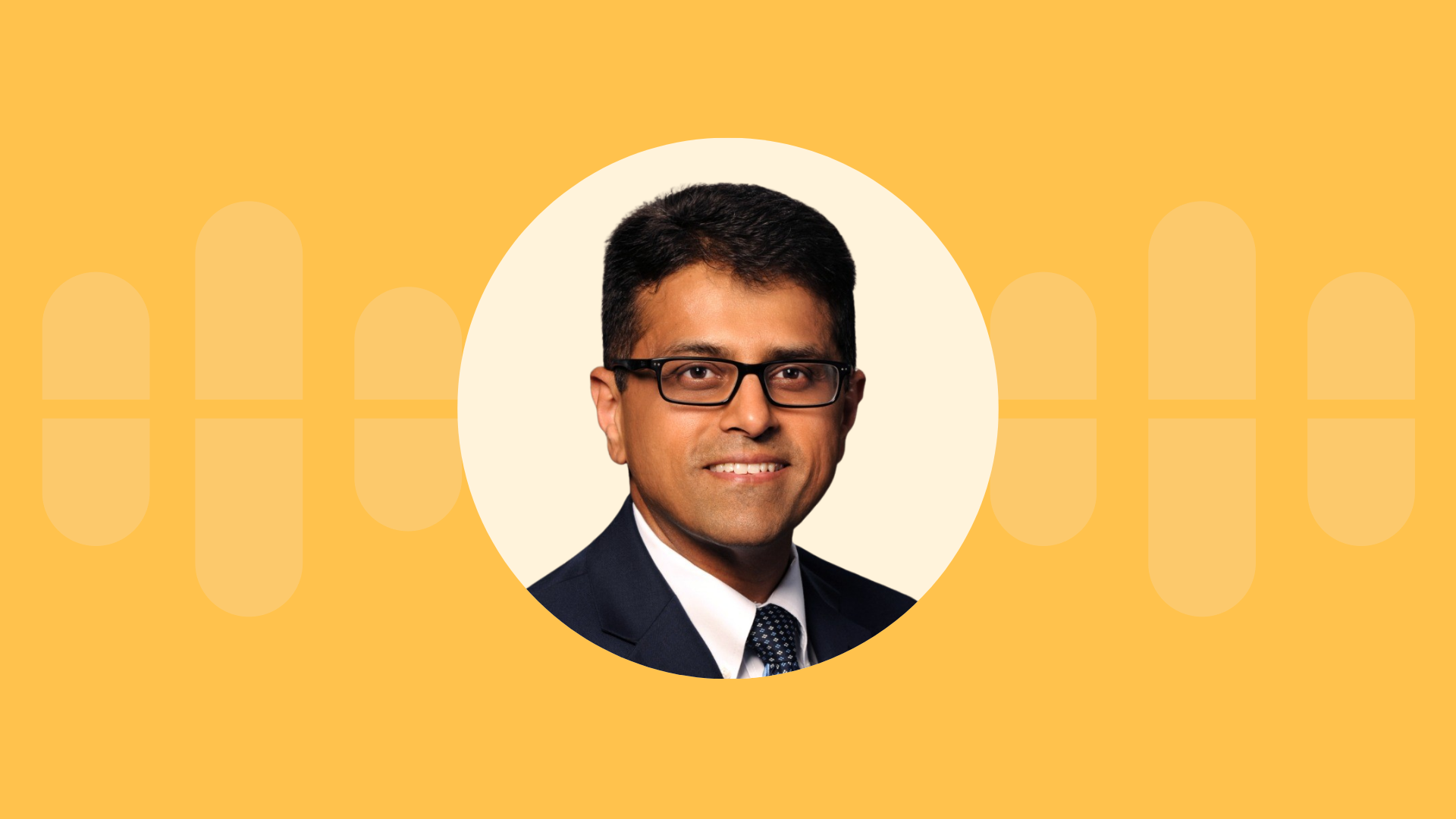
Bea Bakshi, MD, co-founder and CEO of C the Signs, is working to save lives by using AI to scan NHS data for people at risk of cancer and direct them to the right diagnostic test.
In this episode, Dr. Bakshi explains the importance of early-stage diagnosis for survival, how the UK NHS enables population-wide risk detection, and how AI can democratize access to healthcare:
Matching patients with the right testing at the right time is critical for early detection.
Cancer detection beyond the walls of the health system is equally important.
The cost of healthcare is a fundamental barrier to cancer screening, especially in the U.S. compared to the UK.
“AI democratizes access, exceptionally democratizes access, because one of the biggest challenges, I think, when it comes to healthcare inequalities is access and cost.”
– Dr. Bea Bakshi
Key takeaways
Dr. Bakshi discussed early diagnosis, how AI works within the NHS, and why AI can reduce costs for consumers accessing care. Here’s what she covered:
Matching patients with the right testing at the right time is critical for early detection.
Dr. Bakshi’s mission with C the Signs is to improve cancer survival rates by matching patients more quickly with the right diagnostic testing. She emphasized that survival rates are significantly higher when cancer is diagnosed early. “Cancer is fraught [to diagnose] at the get-go… most patients will find a very convoluted way to get diagnosed, constant repeat admissions to see their provider, often a delayed or misdiagnosis,” she said.
Dr. Bakshi described a patient with late-stage pancreatic cancer who had repeatedly sought care for ongoing health issues but wasn’t diagnosed until it was too late. He died just three weeks after diagnosis.“His response was, ‘Why was my cancer diagnosed so late? As a patient, I did all the right things. I kept going back to the provider, yet the system failed me,’” she recalled.
C the Signs aims to reduce diagnostic bottlenecks by sending patients for testing based on real-time risk levels. “AI models analyze electronic health record data and patient-reported data to identify if a patient is at risk of cancer today, the cancer type, and match the patient to the best diagnostic or specialist to rule in or rule out cancer,” Dr. Bakshi explained.
Cancer detection beyond the walls of the health system is equally important.
Dr. Bakshi noted that while C the Signs is used within primary care, that model still depends on patients recognizing symptoms, booking appointments, and showing up. “Many patients will sit in the community and just not act on symptoms or not recognize that their symptoms are significant enough,” she said, increasing the risk of late-stage diagnosis. She outlined two additional pathways: population-based screening and self-assessment screening. Population-based screening reaches high-risk patients who aren’t actively seeking treatment and prompts them to come in for testing. Self-assessment screening extends that reach further by giving agency back to the consumer.
“If they deem that they’re at risk of cancer, rather than bringing them into the provider setting, we can triage them straight to a diagnostic test,” Dr. Bakshi said. “Through these three different methodologies — patient, provider, and population — we can pretty much access all patients for cancer risk stratification and early detection.”
Dr. Bakshi shared that in the UK, a patient moves through the C the Signs screening system approximately every five minutes. “Every twenty-two minutes, we diagnose a new patient with cancer through the technology,” she said.
The cost of healthcare is a fundamental barrier to cancer screening, especially in the U.S. compared to the UK.
Comparing the American and British healthcare systems, Dr. Bakshi pointed to cost as a major barrier to screening in the United States. “We see the additional burden that patients in the UK don’t face — out-of-pocket expenses, very high copays, and in many instances, medical bankruptcy as a result,” she said.
Without national healthcare coverage, many U.S. patients are screened only every few years, even though cancer can metastasize within 12 months. C the Signs addresses this through a direct-to-consumer model in the U.S., continuously screening patient data across systems for cancer risk and helping patients find in-network care if needed.
“We can continuously run an assessment looking for cancer risk in your records so that when your risk changes, we can let you know — rather than waiting for time-based tools like ‘we’re just going to check your risk every three years’ based on cost rather than what’s personal to you,” Dr. Bakshi said. “AI democratizes access… because one of the biggest challenges when it comes to healthcare inequalities is access and cost.”
More episodes you might enjoy
Season 3 | Episode 6
AI in Action: How Health Systems are Approaching the AI Boom
Keith Fraidenburg, MBA
EVP and Chief Operating & Innovation Officer at CHIME
Keith Fraidenburg spent much of 2024 traveling across the United States to understand how health systems are approaching AI. He dives deep into what they're most excited and concerned about, and where we're likely to see healthcare AI going in practice in 2025.
Meeting Patients Where They Are: The Real-World Health Impact
Nassar Nizami
Chief Information Officer at Exact Sciences
"Meeting patients where they are" is one of the core premises of digital health. But what does it look like for downstream health outcomes when this is done well? Nassar Nizami discusses the impact of Exact Sciences' pioneering home cancer screenings.
Dr. Tina Shah brings her extensive experience as a practicing physician, chief clinical officer, and federal advisor on physician burnout to this discussion on provider experience trends and opportunities for AI.
Get the latest episodes delivered directly to your inbox.
We use cookies to ensure that we give you the best experience on our website. If you continue to use this site we will assume that you are happy with it.